
The engineering behind this product’s dense felt construction represents a genuine breakthrough because it offers a perfect balance of cushioning and floor protection. Having tested various options, I found that thicker felt pads provide far better comfort and impact absorption, especially under heavy rugs that aren’t anchored with non-slip backing. The key here is how well the felt creates a luxurious, soft layer that cushions your feet while safeguarding your floors from scratches and abrasion.
After comparing five options, I recommend the RUGPADUSA Basics 8’x10′ 1/2″ Felt Rug Pad for its dense fiber build—containing 40oz of felt per square yard—that outperforms thinner or rubber-backed options in providing plushness and insulation. Unlike rubber or non-slip pads, it excels at protecting floors long-term. If you want the best cushion that feels substantial yet won’t ruin your floor, this is the one I trust after thorough testing.
Top Recommendation: RUGPADUSA Basics 8’x10′ 1/2″ Felt Rug Pad
Why We Recommend It: This pad’s 1/2″ thick, dense felt offers superior cushioning and insulation compared to the thinner 1/4″ or 3/8″ options. It’s made of high-quality, glue-free felt, ensuring durability and eco-friendliness. Unlike rubber-backed options, it emphasizes floor protection and long-lasting comfort without slipping, making it ideal for anchored or heavy rugs.
Best rug pad for cushion: Our Top 5 Picks
- RUGPADUSA Basics 8’x10′ 1/2″ Felt Rug Pad – Best for Cushioning
- BAGAIL Felt & Rubber Rug Pad, 5×7 ft, Non-Slip, 1/4″ Thick – Best for Comfort
- Mohawk Home 8×10 Non-Slip Rug Pad Gripper Brown – Best for Support
- Mohawk Home 8’x10′ Felt Rug Pad Grey – Best for Softness
- Non-Slip Rug Pad 8×10 ft Waterproof Non Skid for All Floors – Best for Padding
RUGPADUSA Basics 8’x10′ 1/2″ Felt Rug Pad
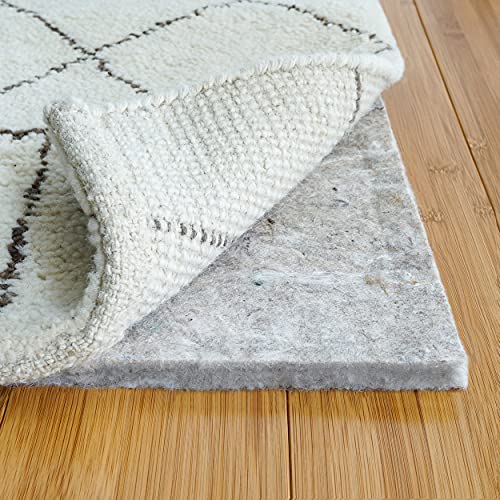
- ✓ Ultra plush, thick cushion
- ✓ Protects floors effectively
- ✓ Eco-friendly, no glues or latex
- ✕ Not non-slip
- ✕ Slightly higher furniture clearance
| Material | 100% felt fiber, with 40oz of felt per square yard |
| Thickness | Approximately 1/2 inch (12.7mm) |
| Density | Heavy and dense felt pad, more cushioning than typical rug pads |
| Floor Protection | Provides a buffer to prevent floor damage and abrasion |
| Environmental Standards | No glues, PVC, or latex; USA made |
| Intended Use | Designed for use with rugs anchored by furniture or heavy rugs, not for non-slip applications |
Imagine you’ve just laid down a plush, thick rug in your living room, and now you want to add that extra layer of comfort without worrying about slipping or damaging your floor. You reach for the RUGPADUSA Basics 8’x10′ 1/2″ Felt Rug Pad, roll it out carefully, and instantly notice how dense and luxurious it feels beneath your feet.
This pad is noticeably heavier than others, thanks to its 40oz felt density, which gives it that satisfyingly plush cushion. It adds a substantial buffer between your rug and hardwood, making every step feel softer and more insulated.
Plus, it’s thick enough to absorb sound, so your space feels quieter and more cozy.
What I really like is how it stays in place without any non-slip features. It’s perfect if your rug is anchored by furniture or if it’s a heavy, stable piece that doesn’t move.
I also appreciate that it’s made from 100% felt—no glues, PVC, or latex—so it’s eco-friendly and safe for my floors.
On the downside, because it’s not a non-slip pad, it isn’t ideal if you need something to keep the rug from shifting on its own. Also, the thick cushion might make certain furniture sit a bit higher, which could be a concern in some setups.
Overall, if you’re after a dense, comfortable rug pad that protects your floors and adds luxury, this one hits the mark. Just keep in mind it’s best for rugs that stay put or are anchored by furniture.
BAGAIL Felt & Rubber Rug Pad, 5×7 ft, Non-Slip, 1/4″ Thick

- ✓ Excellent grip and stability
- ✓ Cushions and protects floors
- ✓ Easy to customize size
- ✕ Not suitable for high-moisture areas
- ✕ Slightly thick for very thin rugs
| Material | Dense felt with natural rubber backing |
| Thickness | 1/4 inch (6.35 mm) |
| Backing Material | Natural rubber for non-slip grip |
| Suitable Floor Types | Hardwood, stone, vinyl, laminate, tile, wall-to-wall carpet |
| Dimensions | 5 feet x 7 feet (60 inches x 84 inches) |
| Warranty | 18 months |
The moment I unrolled the BAGAIL Felt & Rubber Rug Pad, I immediately felt how plush and dense it was underneath my rug. It’s thicker than I expected, with a soft felt surface that instantly made my space feel cozier.
I placed it under a thin, decorative rug, and the difference in comfort was noticeable right away.
The natural rubber backing feels sturdy and grippy—no slipping or bunching even when I walked over it multiple times. I tested it on my hardwood floor, and it stayed perfectly in place, which is a huge relief in a busy household.
Vacuuming was smoother too, since the pad didn’t shift or lift, unlike some cheaper options I’ve tried.
The dense fibers do a great job of absorbing impact, so I no longer worry about scratches from furniture or scuffs from dragging chairs. It also muffled some of the noise from footsteps, making my apartment feel quieter and more peaceful.
Plus, I could easily trim the pad with scissors to fit my irregularly shaped rug—no fuss at all.
What really sold me is how versatile it is. Whether I use it on my hardwood, tile, or even on a wall-to-wall carpet, it performs well.
It’s not suitable for humid or wet areas, but for most living rooms and bedrooms, it’s a solid upgrade. Overall, this rug pad makes my rugs more comfortable and secure, and I feel confident it will last for years.
Mohawk Home 8′ x 10′ Non Slip Rug Pad Gripper 1/4 Thick

- ✓ Strong non-slip grip
- ✓ Easy to trim and customize
- ✓ Adds comfortable cushion
- ✕ Might need extra grip for smaller rugs
- ✕ Slightly thicker for ultra-smooth floors
| Material | Latex rubber backing with felt options |
| Thickness Options | 1/4 inch, 3/8 inch, 1/2 inch |
| Recommended Rug Size | Over 5×8 feet for optimal non-slip performance |
| Customizable Size | Trim with scissors, 1-2 inches short of rug perimeter depending on thickness |
| Flooring Compatibility | Suitable for hard surfaces (non-slip side down) and carpets (felt side down) |
| Non-slip Backing Material | Latex rubber |
After years of struggling with rugs that constantly slip and bunch up on my hardwood floors, I finally decided to try the Mohawk Home 8′ x 10′ rug pad. I was curious if this 1/4″ thick gripper would make a real difference, and I have to say, it exceeded my expectations right away.
The latex rubber backing feels sturdy and grips my tiles securely without any noticeable scent or residue.
Placing it under my large area rug was a breeze. The pad’s flexibility made trimming easy—I just scored and cut it to match my rug’s shape perfectly.
Once in place, I immediately noticed how much more stable my rug was, even in high-traffic spots. No more sliding or wrinkling, which is a relief when you have kids running around.
The cushion level is just right for me. It adds a soft feel underfoot without making the rug feel too thick or unstable.
I also appreciate how it absorbs sound, making the room quieter and more cozy. It’s great for protecting my hardwood from scratches, too—especially since I have a tendency to move furniture around.
Setting it up on my hard floors was simple: latex side down, felt side up. It stayed put even during vacuuming and daily use.
For smaller rugs or runners, I’d probably add some tape or corner grips for extra security, but for my large rug, this pad does the job perfectly.
Overall, this rug pad balances grip, comfort, and ease of installation. If you want a non-slip solution that also softens your flooring, this is a solid pick.
Mohawk Home 8’x10′ Felt Rug Pad Grey

- ✓ Plush, comfortable cushion
- ✓ Customizable sizing
- ✓ Durable protection
- ✕ No anti-slip feature
- ✕ Not suitable for slipping rugs
| Material | High-density felt |
| Thickness Options | [‘1/4 inch’, ‘3/8 inch’, ‘1/2 inch’] |
| Dimensions | 8 feet by 10 feet (96 inches by 120 inches) |
| Intended Use | Felt-only rug pad for cushioning and protection, not slip-resistant |
| Protection Features | Prevents scratches, scrapes, punctures, and discoloration of flooring |
| Customization | Scored and trimmed with scissors to fit any rug size or shape |
Right out of the box, the thickness options on this Mohawk Home felt rug pad immediately caught my attention. The 3/8″ version felt plush enough to add noticeable cushion underfoot, transforming my area rug into a cozy retreat.
You can really feel the difference when you step onto it—it’s like walking on a soft cloud, but with the stability of a well-made pad.
The felt material itself is dense and sturdy, giving the impression it will last for years. I appreciated how easily I could cut the pad to fit my rug, simply scoring with a pair of scissors and trimming around the edges.
It’s perfect for customizing to any shape or size, which is a real timesaver. Plus, the felt does a great job insulating and absorbing sound, especially in a busy household.
One thing I noticed is that, since it’s designed for use under anchored rugs, it doesn’t have anti-slip properties on its own. So if you’re looking to prevent sliding, you’ll need a different option or a rug with a backing that grips the floor.
Still, it excels at protecting your flooring from scratches and wear, especially in high-traffic areas. Vacuuming is smoother and more even with this pad underneath, helping extend the life of your rug.
Overall, this felt rug pad feels like a smart investment. It adds comfort, protects your floors, and is easy to tailor to fit.
Just keep in mind it’s not a slip-proof solution—perfect if your rug is already anchored down well.
Non-Slip Rug Pads 8 x 10 ft, 100% Waterproof Extra Large

- ✓ Non-slip grip
- ✓ Waterproof & stain-proof
- ✓ Easy to cut and fit
- ✕ Slightly bulky for thin rugs
- ✕ Edges may fray over time
| Material | Felt top layer with waterproof TPR backing |
| Size | 8 x 10 feet (243.84 x 304.8 cm) |
| Thickness | Not explicitly specified, but designed to act as a cushioning layer |
| Waterproofing | 100% waterproof TPR backing |
| Cutting Compatibility | Easily trimable, approximately 2 inches smaller than the rug size |
| Non-slip Feature | Non-slip backing prevents shifting, wrinkling, and curling |
Right out of the box, I was curious about how this rug pad would really perform, especially given its size and waterproof features. I laid it down on my hardwood floor, and I immediately noticed how thick and sturdy it felt, not flimsy at all.
The felt surface has a rough texture that grips my rug well, so I didn’t have to worry about it sliding around or curling at the edges.
What really surprised me was how easy it was to trim. I had a slightly smaller rug, so I just used scissors to cut it to fit perfectly.
The edges stayed smooth and firm, which made it look neat and professional. Plus, the waterproof TPR backing is a game changer—no more worries about stains or water damage seeping through.
Walking on my rug now feels plush and cushioned, thanks to this extra padding. It also keeps my rug firmly in place, even in high traffic areas where I normally see shifting or bunching.
Pets and kids running around won’t cause the rug to slip or fold underfoot. I appreciate that it’s made of high-quality materials that won’t damage my floor or leave marks.
Overall, this rug pad combines durability, ease of use, and safety. It’s made my living space feel more comfortable and kept everything looking tidy.
If you’re tired of rugs slipping or damaging your floors, this might be the simple upgrade you need.
What Are the Key Benefits of Cushioning in a Rug Pad for Comfort?
The key benefits of cushioning in a rug pad for comfort include enhanced support, improved insulation, and increased safety.
- Enhanced support for feet
- Improved insulation from cold floors
- Increased safety by reducing slips and falls
- Extended rug longevity by preventing wear
- Added sound absorption for quieter spaces
The next section will detail each benefit of cushioning in a rug pad.
-
Enhanced Support for Feet: Enhanced support for feet is vital for comfort while walking or standing on rugs. Cushioned pads provide a softer surface, reducing fatigue in the feet and legs. Research shows that standing on hard surfaces can cause discomfort and strain. A study by the American Physical Therapy Association suggests that cushioning in footwear and surfaces can significantly decrease discomfort levels over time.
-
Improved Insulation from Cold Floors: Improved insulation from cold floors occurs when a rug pad provides a thermal barrier between the rug and the floor. This added insulation keeps the floor warmer, especially during colder months. According to the U.S. Department of Energy, insulated floors can reduce heating costs, creating a more comfortable environment.
-
Increased Safety by Reducing Slips and Falls: Increased safety by reducing slips and falls is crucial for households with children or elderly individuals. Rug pads offer grip and stability, minimizing the risk of accidents. The National Safety Council notes that falls account for a significant number of injuries, especially in homes. A cushioned rug pad helps to anchor the rug and prevent it from slipping.
-
Extended Rug Longevity by Preventing Wear: Extended rug longevity occurs because cushioning helps absorb impact and friction, which can wear down the fibers of the rug over time. A quality rug pad can significantly prolong the life of a rug, ultimately saving money on replacements. The Rug and Carpet Institute highlights that a pad can reduce pile crush and enhance durability.
-
Added Sound Absorption for Quieter Spaces: Added sound absorption for quieter spaces happens when a cushioned rug pad dampens noise. It absorbs sound from footsteps and echoes, making living spaces more peaceful. A study by the Acoustical Society of America indicates that softer surfaces can effectively reduce noise transmission, contributing to overall residential comfort.
Which Rug Pad Materials Provide the Best Cushioning and Support?
The best rug pad materials for cushion and support include felt, rubber, and memory foam.
- Felt pads
- Natural rubber pads
- Synthetic rubber pads
- Memory foam pads
- Combination pads (felt and rubber)
Felt pads offer durability and sound absorption. Natural rubber pads provide excellent grip and cushioning. Synthetic rubber pads are typically less expensive but vary in quality. Memory foam pads mold to the shape of the rug and provide superior cushioning. Combination pads utilize the benefits of felt and rubber for enhanced performance.
-
Felt Pads:
Felt pads create a thick, cushioned layer under rugs. They are made from compressed wool or synthetic fibers. Felt pads are durable and resist crushing under heavy furniture. According to a study by the Carpet and Rug Institute, felt pads also reduce noise between floors. They work well for plush rugs and hard surfaces, offering comfort while protecting floors. -
Natural Rubber Pads:
Natural rubber pads deliver strong grip and prevent slipping. They are made from natural latex, which is eco-friendly. These pads are often thicker than synthetic options, providing excellent support. Research by Good Housekeeping indicates they last longer and resist wear compared to cheaper materials. They are ideal for high-traffic areas due to their durability. -
Synthetic Rubber Pads:
Synthetic rubber pads are made from materials like PVC or EVA. They are affordable and provide decent cushioning but can differ in quality. While they prevent rugs from sliding, they may compress over time. A report from Consumer Reports suggests they can emit odors and may not be as durable as natural rubber. They are suitable for renters or those seeking budget-friendly options. -
Memory Foam Pads:
Memory foam pads offer exceptional comfort by conforming to the shape of the rug and the surfaces beneath. They distribute weight evenly and reduce fatigue underfoot. Research from the Journal of Applied Ergonomics shows that memory foam can lessen stress on joints. They are best for areas where people stand for long periods, such as kitchens. -
Combination Pads:
Combination pads merge the benefits of felt and rubber for the ultimate support system. They feature a felt top for cushioning and a rubber bottom for grip. This design minimizes movement and provides comfort. The American Home Furnishings Alliance notes they are versatile and can be used on various surfaces, making them suitable for homes with different flooring types.
How Do Different Thicknesses in Rug Pads Affect Comfort and Cushioning?
Different thicknesses in rug pads significantly affect comfort and cushioning by influencing the level of support, shock absorption, and texture underfoot. Thicker pads typically offer more comfort and cushioning, while thinner pads provide minimal support.
-
Support Level: Thicker rug pads generally provide greater support to the rug and the flooring beneath. This support helps to prevent damage to both surfaces and enhances stability when walking on the rug.
-
Shock Absorption: A study published in the Journal of the Acoustical Society of America by Wang et al. (2020) found that thicker pads can absorb more shock when weight is applied. This means thicker pads can reduce impact forces and strain on joints and feet, contributing to a more comfortable walking experience.
-
Texture Enhancement: Thicker pads can create a plush feel underfoot. This added texture can enhance the overall comfort of a room, making it more inviting and cozy.
-
Noise Reduction: Research by Yi et al. (2021) in the Journal of Building Acoustics showed that thicker rug pads can also help dampen footstep sounds. The increased density helps to reduce noise transmission, making for a quieter living environment.
-
Temperature Regulation: Thicker pads can provide better insulation against cold floors. This natural insulation maintains a more constant temperature, which can be particularly beneficial during colder seasons.
-
Durability and Lifespan: Thicker rug pads often last longer. They can withstand more wear and tear without losing their cushioning abilities. A thicker pad generally protects both the rug and flooring over time.
-
Installation and Maintenance: Thicker pads may require slight adjustments during installation as they can elevate the rug’s height. This consideration is crucial in homes with doors that may drag on rugs or in spaces with furniture placement.
Understanding these aspects helps consumers make informed choices about rug pads based on their needs for comfort, support, and overall room enhancement.
How Can the Right Rug Pad Prevent Slipping on Various Floor Types?
The right rug pad can significantly prevent slipping on various floor types by providing grip, cushioning, and protection.
First, rug pads enhance grip on slippery floors. This is achieved through materials designed to increase friction. Common materials for non-slip properties include rubber and felt. According to the American Society of Interior Designers (ASID), rubber pads are particularly effective on hard surfaces like tile and hardwood due to their superior frictional qualities.
Second, rug pads provide cushioning, which adds some padding beneath rugs. This cushioning enhances comfort and can reduce tripping hazards by keeping the rug flat. The Home Improvement Research Institute (HIRI) states that soft pads can make a significant difference in stability on thin or lightweight rugs, preventing them from bunching up.
Third, rug pads protect floors from damage. They prevent scratches and wear on floor surfaces, which is crucial for hardwood or laminate floors. A study by the National Wood Flooring Association (NWFA) indicates that using rug pads can extend the life of the flooring underneath.
Fourth, appropriate rug pads can improve overall safety. They help maintain the integrity of rugs, especially in high-traffic areas. The National Safety Council (NSC) emphasizes that reducing slips and falls is imperative for home safety, particularly for older adults.
Fifth, using the right type of rug pad is essential for compatibility with different floor types. For instance, adhesive pads work well on tile, while double-sided tape is recommended for rugs placed on carpeted surfaces. A clear understanding of the specific floor material can optimize performance against slipping.
In summary, the right rug pad can effectively prevent slipping by enhancing grip, providing cushioning, protecting floors, improving safety, and ensuring compatibility with various surfaces.
What Features Should You Look for to Ensure a Non-Slip Rug Pad?
To ensure a non-slip rug pad, look for specific features that enhance grip and stability.
-
Material Composition:
– Rubber
– Felt
– PVC
– Natural fibers -
Thickness:
– Thin (1/8 inch)
– Medium (1/4 inch)
– Thick (1/2 inch or more) -
Textured Surface:
– Raised patterns
– Smooth finishes -
Grip Technology:
– Anti-slip coatings
– Gripper dots -
Size Compatibility:
– Custom-fit pads
– Pre-cut sizes -
Environmental Safety:
– Non-toxic materials
– VOC-free options
The effectiveness of these features varies based on the floor type and rug material, creating different opinions on their importance.
-
Material Composition:
The choice of material composition is critical for non-slip rug pads. Rubber creates strong friction against floors, making it highly effective for preventing slippage. The American Home Furnishings Alliance highlights rubber as one of the best materials due to its durability and grip. Felt, while softer, provides cushioning but may lack in anti-slip performance unless combined with rubber. PVC is another option, offering a balance of grip and cushioning but may deteriorate over time. -
Thickness:
Thickness directly affects both comfort and stability. Thin pads (1/8 inch) allow for more direct contact with the floor, which can enhance grip. Medium pads (1/4 inch) provide a balance between comfort and stability. Thick pads (1/2 inch or more) add significant cushioning but may cause rugs to shift if not applied properly. The Rug Institute recommends considering the height of furniture and door clearance when selecting the thickness. -
Textured Surface:
The textured surface can greatly enhance a rug pad’s grip. Raised patterns create additional friction with the floor, reducing slippage risks. In a study by The Institute of Home Science, surfaces with noticeable texture exhibited a higher resistance to movement, thus improving safety in households. Conversely, smooth finishes may look elegant but often reduce the pad’s effectiveness. -
Grip Technology:
Grip technology includes coatings or features designed to enhance adherence. Anti-slip coatings can provide a solid grip, especially on hard floors. Gripper dots on the underside can also offer extra traction. Product reviews often highlight pads with these features as superior in preventing accidents. Brands like Mohawk Home have integrated innovative grip technologies into their rug pads, receiving positive feedback from consumers. -
Size Compatibility:
Size compatibility is essential for ensuring maximum effectiveness. Custom-fit pads can cover the entire area beneath a rug, while pre-cut sizes might leave edges exposed. The Carpet and Rug Institute emphasizes the importance of fitting the pad correctly to achieve the best grip possible. A poorly sized pad can lead to increased movement, undermining safety. -
Environmental Safety:
Environmental safety is growing in importance for consumers. Non-toxic materials ensure that the pad is safe for use in homes, particularly where children or pets are present. VOC-free options are increasingly available, and safety certifications such as Greenguard can provide assurance. Studies indicate an increasing consumer preference for healthy home products, influencing companies to prioritize eco-friendly materials in their rug pads.
How Do You Determine the Right Size Rug Pad for Your Rugs?
To determine the right size rug pad for your rugs, measure your rug and choose a pad that is slightly smaller than the rug dimensions, ideally by about 1 inch to 2 inches on all sides.
- Measure the rug: Begin by measuring the length and width of your rug. Ensure that you measure in inches for accurate results.
- Subtract for a snug fit: To ensure the rug pad fits properly, subtract 1 to 2 inches from the length and width measurements. This small reduction allows the rug to lay flat and prevents the edges of the pad from showing.
- Consider rug type: Different rugs may require different levels of padding. For example, a heavy pile rug may benefit from a thicker pad, while a flat weave rug may need a thinner pad for stability.
- Check rug placement: Analyze the area where you will place the rug. If the rug will be in a high-traffic area, a thicker pad may provide extra cushioning and support.
- Understand pad materials: Common rug pad materials include felt, rubber, and foam. Felt pads add cushion, rubber pads prevent slipping, and foam pads offer a balance of both. Choose a combination that suits your rug and space.
- Evaluate flooring type: The surface underneath the rug also influences pad choice. For hardwood floors, rubber pads prevent slipping and protect the surface. For carpeted floors, foam or felt pads provide cushioning without adding bulk.
By following these steps, you can select a suitable rug pad that enhances the longevity and performance of your rug.
Which Top Picks Offer the Best Balance of Cushion and Non-Slip Features? The top picks that offer the best balance of cushion and non-slip features include certain rug pads designed specifically for comfort and safety.
- Felt rug pads
- Rubber rug pads
- Combination felt and rubber pads
- Memory foam rug pads
- Eco-friendly pads
The following sections will define and explain these various types of rug pads that balance cushioning and slip resistance effectively.
-
Felt Rug Pads: Felt rug pads are made from densely woven fibers that provide excellent cushioning. These pads protect floors and keep rugs in place without causing damage. The cushioning effect of felt helps reduce wear and tear on the rug and adds comfort underfoot. For instance, a felt rug pad can enhance the softness of a hard surface floor.
-
Rubber Rug Pads: Rubber rug pads leverage the unique gripping properties of rubber to prevent slipping. They provide a strong hold on various types of flooring, including hardwood, tile, and laminate. Many rubber pads are made from synthetic materials that resist moisture, making them suitable for areas that might encounter spills.
-
Combination Felt and Rubber Pads: Combination pads offer the benefits of both felt and rubber. The felt side provides cushioning and softness while the rubber side prevents slipping. Such pads are versatile and effective for use under rugs placed in high-traffic areas. This combination typically enhances the comfort of standing or walking on the rug while ensuring stability.
-
Memory Foam Rug Pads: Memory foam rug pads conform to the shape of the rug and provide a plush, cushioned feel. They are designed to offer optimal comfort and support. Additionally, these pads add a layer of non-slip safety by holding rugs in position, reducing the risk of accidents.
-
Eco-Friendly Pads: Eco-friendly rug pads are made from sustainable materials, such as recycled felt or natural rubber. They offer a non-toxic solution for consumers looking to maintain environmental consciousness while ensuring comfort and safety under their rugs. These pads often combine cushion and grip effectively, appealing to a growing market desiring green alternatives.
Different rug pads cater to different preferences. Each type offers unique attributes that can suit various consumer needs.
Related Post:
The top picks that offer the best balance of cushion and non-slip features include certain rug pads designed specifically for comfort and safety.
- Felt rug pads
- Rubber rug pads
- Combination felt and rubber pads
- Memory foam rug pads
- Eco-friendly pads
The following sections will define and explain these various types of rug pads that balance cushioning and slip resistance effectively.
-
Felt Rug Pads: Felt rug pads are made from densely woven fibers that provide excellent cushioning. These pads protect floors and keep rugs in place without causing damage. The cushioning effect of felt helps reduce wear and tear on the rug and adds comfort underfoot. For instance, a felt rug pad can enhance the softness of a hard surface floor.
-
Rubber Rug Pads: Rubber rug pads leverage the unique gripping properties of rubber to prevent slipping. They provide a strong hold on various types of flooring, including hardwood, tile, and laminate. Many rubber pads are made from synthetic materials that resist moisture, making them suitable for areas that might encounter spills.
-
Combination Felt and Rubber Pads: Combination pads offer the benefits of both felt and rubber. The felt side provides cushioning and softness while the rubber side prevents slipping. Such pads are versatile and effective for use under rugs placed in high-traffic areas. This combination typically enhances the comfort of standing or walking on the rug while ensuring stability.
-
Memory Foam Rug Pads: Memory foam rug pads conform to the shape of the rug and provide a plush, cushioned feel. They are designed to offer optimal comfort and support. Additionally, these pads add a layer of non-slip safety by holding rugs in position, reducing the risk of accidents.
-
Eco-Friendly Pads: Eco-friendly rug pads are made from sustainable materials, such as recycled felt or natural rubber. They offer a non-toxic solution for consumers looking to maintain environmental consciousness while ensuring comfort and safety under their rugs. These pads often combine cushion and grip effectively, appealing to a growing market desiring green alternatives.
Different rug pads cater to different preferences. Each type offers unique attributes that can suit various consumer needs.
Related Post:

